Marcè Nixon-Washington

Marcè Nixon-Washington

MFA Student Ceramics

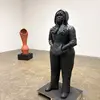
two sculptures in a gallery
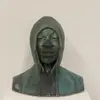
ceramic bust of a person in a hood

Marcè Nixon-Washington is a multidisciplinary artist based in Pittsburgh, Pennsylvania. She received her BFA from West Virginia University with a focus in Africana Studies and is completing her MFA at Tyler School of Art and Architecture (May 2026).

Marcè studied ceramics in Jingdezhen, China, where she developed a deep interest in shards and ceramic history. She investigates ceramics as an archival material for recording personal and cultural histories. Her work has been exhibited at Companion Gallery, Concept Art Gallery, The Carnegie Museum of Art, and the Mufei Gallery in Jingdezhen, China. She has participated in residencies at the Archie Bray Foundation, Manchester Craftsmen’s Guild, Haystack Mountain School of Crafts, 1HOOD, and PCA&M. Marcè is deeply committed to teaching and has taught at Carnegie Mellon University, August Wilson Center, and Tyler School of Art. Her work has been published in TABLE magazine and Ceramics Monthly. In 2024, she became the youngest artist invited to exhibit at the NCECA Annual. 
Artist Statement

I grew up in Pittsburgh, PA, surrounded by plastic orange milk crates and skyscrapers layered with the sounds of PAT (Port Authority Transit) buses and Steelers fans. Most people don’t notice the woman operating the train or the guy washing the windows at the stadium. So I choose to sculpt the Ms. Nia’s of the world, because everyday people deserve to be archived, too. Sculpting marginalized folks makes visible the people who keep the city running. 

Orange milk crates represent Pittsburgh’s favorite tea, Turner’s Tea, a household staple as long as I can remember. An orange crate, “borrowed” from the corner store, holds some of my best memories, from getting my hair braided on the porch to playing basketball. The orange crate appears in my work as a pedestal to elevate the working class and the mundane memories that connect us. 

My work is centered on the archival nature of ceramics. I choose clay for its resilience, something I witnessed during my time in China while closely studying the Terracotta Warriors. Ceramics is one of the few materials that can withstand fire, burial, and submersion in water. This durability is essential to my practice, which responds to the deliberate burning and erasure of Black history throughout the Jim Crow era and beyond. 

My coil-built vessels draw on West African techniques, connecting my work to ancestral practices. The surfaces are inspired by West African mudcloth fabric and city landscapes, weaving together my cultural heritage and contemporary lived experience. By archiving Black and Brown people in clay, I refute the notion that our bodies, voices, and stories are invisible. We live vibrant, beautiful lives in spite of oppression, systemic racism, and stereotyping. We are not monolithic. 

I hope my work will serve as a primary source and testimony to my experience as a young Black woman from Pittsburgh. Clay is archival, and every time I create, I hear my grandma’s laughter saying, “They couldn’t erase me.”