
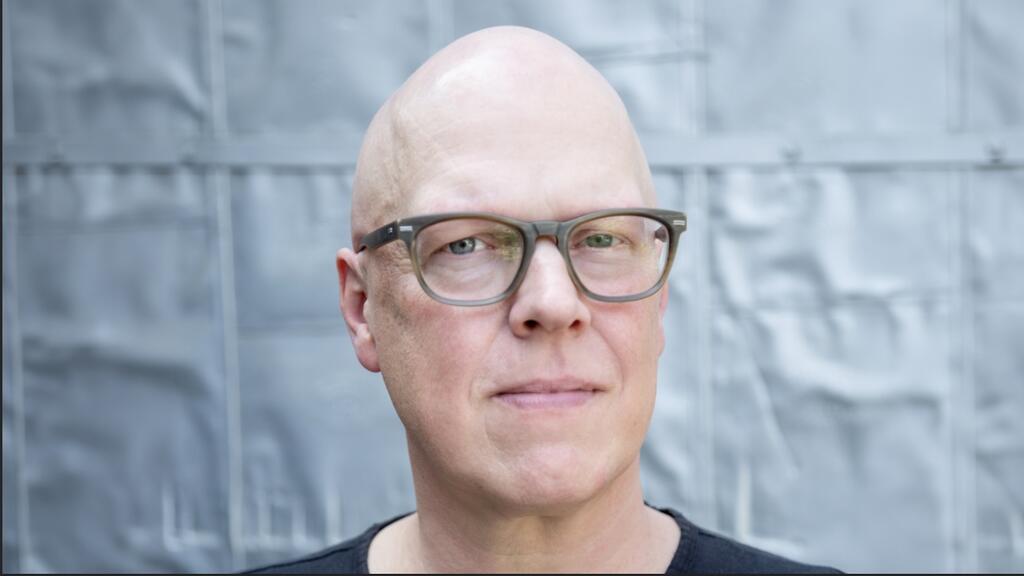
Photo by Noé Montes
Writer and curator Tim Griffin has been named the inaugural critic-in-residence by the Tyler School of Art and Architecture. The critic-in-residence is part of a constellation of artist-centered programs offered through the Tyler Center for Art and Creative Exchange, housed at the Pennsylvania Academy of the Fine Arts (PAFA) in Philadelphia’s Center City. Griffin brings to the role a career spent shaping contemporary art discourse, including his leadership as executive director and chief curator of The Kitchen, an interdisciplinary alternative space based in New York City. As editor-in-chief of Artforum from 2003 to 2010, he helped guide one of contemporary art’s leading publications during a period of historic changes in the field. Most recently, Griffin was artistic and executive director of The Industry, a Los Angeles nonprofit devoted to experimental opera.
At Tyler, Griffin will bring his experience as a writer, editor and curator into engagement with artists, students and Philadelphia’s broader creative community. The critic-in-residence program invites a leader in the visual arts field to contribute to the city’s arts discourse through writing, public dialogue and engagement with exhibitions and cultural life. Working in collaboration with artists, media and arts organizations, Griffin will develop critical reflections that connect Philadelphia’s artistic activity to broader national and global currents in contemporary art.
Through the Center, Tyler is creating new opportunities for students and artists to engage with Philadelphia’s vibrant arts community. Griffin’s residency adds a critical dimension to that work, creating space for reflection, dialogue and discovery alongside artistic practice.
For Tyler dean Susan E. Cahan, Griffin’s appointment reflects the Center’s commitment to bringing artistic practice into sustained conversation with the ideas and conditions that shape it.
“Tim brings an extraordinary depth of experience and perspective to this inaugural role. His career has placed him at the center of some of the most important conversations in contemporary art, both as a writer and editor and through his work with artists,” Cahan said. “Just as importantly, he has a long history of building relationships and creating the conditions for meaningful exchange. That combination makes him an especially compelling person to help shape what this role can become—not only for Tyler and our students, but for Philadelphia’s broader artistic community.”
For Griffin, the role begins with a simple ambition: to be a “catalyst for artists, spurring dialogues and community building in a way that meets the demands of our moment.” With office space on the same floor as the Center’s Post-MFA Fellowship program, he will work in close proximity to emerging artists as they develop their practices, creating opportunities for ongoing exchange.
Throughout his career, Griffin’s work has bridged writing, editing and curatorial practice, considering not only individual artists and works of art but also the larger contexts in which art is produced, experienced and understood. At The Kitchen, he collaborated with leading creative figures, including Chantal Akerman, Claudia Rankine and Danh Vo; and as editor at Artforum, he commissioned now-anthologized texts by artists such as Andrea Fraser and Glenn Ligon, among others. His forthcoming book of essays, "Compression," examines contemporary artists’ approaches to historical memory and will be published by Sternberg Press in autumn 2027. That perspective aligns closely with the mission of the Tyler Center for Art and Creative Exchange, which brings together artists and cultural communities to support creative practice and foster new forms of dialogue.
At its best, Griffin believes criticism is a form of meaning-making. Rather than simply assigning judgment to a work of art, criticism can offer an opportunity to consider why a work matters and how it relates to larger artistic, social and historical questions.
That approach will shape his engagement with Philadelphia. While Griffin has already begun to identify aspects of the city’s artistic landscape that spark his curiosity—including its artist-run spaces and the relationships among artists working across disciplines—he does not intend to arrive with a predetermined editorial agenda.
“If you’re seeking to write criticism, or engage critically, you shouldn’t walk into the room already knowing what you’re going to say,” he said. “And the pleasure is in the learning.”
His residency will also extend beyond the page. Through conversations and other forms of public engagement, Griffin will bring artists, students, writers and other members of the creative community into dialogue around the questions shaping contemporary art. For him, the value of those exchanges lies not only in the topics under discussion, but also in the perspectives that emerge when people from different backgrounds and disciplines encounter one another.
“I’m really interested in being in dialogue with artists who are entering this brave new world,” Griffin said. “To collaboratively think through or identify what their questions are, as well as what shape art and discourse can take.
Cahan sees that openness as central to what Griffin will bring to the role.
“Criticism can be a way of entering into conversation and sparking new connections,” she said. “Tim’s wealth of experience and his openness to discovery will undoubtedly contribute enormously to Tyler and to Philadelphia’s artistic community.”
As Tyler’s inaugural critic-in-residence, Griffin will offer the Philadelphia community new opportunities to engage with contemporary art through conversation, critical writing and encounters with artists. His residency reflects Temple University’s commitment to place-based impact through new opportunities for artists, students and audiences to connect and exchange ideas.